This week’s highlights:
A group of major publishers and authors has sued Google in New York, accusing the company of using copyrighted books without permission to train its Gemini AI models. The lawsuit also claims Google removed or changed copyright details to hide that the material was used, including books from Google Books and the Google Play store that were originally shared for limited purposes.
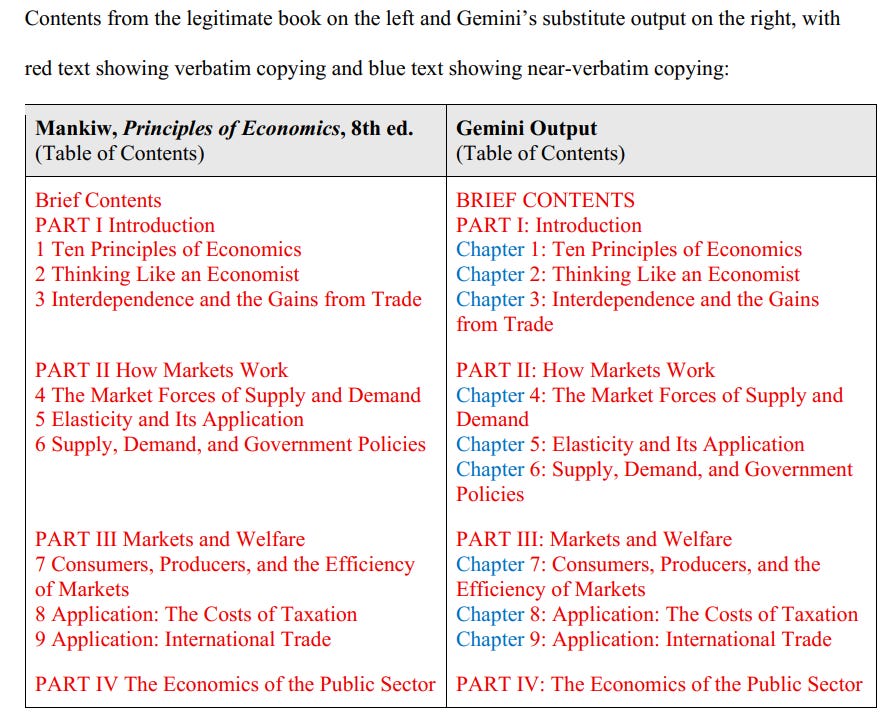
The case is part of a wider wave of legal challenges against AI companies over the use of copyrighted content for training. Two recent California rulings supported AI companies by finding such training to be fair use. However, Anthropic was ordered to pay $1.5 billion for pirating the works used for training, marking the largest payout in U.S. copyright history.

At the School of Responsible AI (SoRAI), we help both individuals and organizations build practical, real-world AI literacy and Responsible AI capability through structured, engaging, and action-oriented programs. For individuals, this includes AI Literacy, globally relevant certification training such as AIGP, RAI, and AAIA, as well as career transition and advisory support for professionals moving into AI governance roles. For organizations, we offer customized enterprise AI literacy training, Responsible AI strategy and governance setup, and AI assurance support to help teams understand, operationalize, and validate AI responsibly. At the core of SoRAI is a progressive three-layer approach: first helping people understand AI, then build the right governance foundations, and finally validate readiness through assurance and audit-focused thinking. Want to learn more? Explore our AI Literacy programs, certification trainings, and career support offerings, or write to us for customized enterprise solutions.

⚖️ AI Ethics
New York Halts New Large Data Center Projects for One Year
New York has become the first US state to temporarily stop permits for new large data centers after an executive order paused approval of projects of 50 megawatts or more. The move comes amid rising concern over power use, water demand, noise, and the fast growth of AI-driven computing, with the state saying such projects must still follow local zoning and community approval. The pause is expected to last about a year while officials create a formal environmental review process, and the state is also weighing new grid payments and limits on tax breaks for hyperscale facilities. The decision could affect more than a dozen proposed projects and comes as public opposition to large data centers is growing, even as federal officials push to speed up their development.
xAI Sues User Accused of Using Grok to Create Abuse Material
xAI has sued a South Carolina man, accusing him of misusing its Grok AI tool to create child sexual abuse material and non-consensual sexual deepfakes. The lawsuit, filed in federal court in Texas, says he broke the platform’s terms by uploading images of adults and minors and trying to turn them into explicit content. The case is seen as one of the first in which an AI company has taken legal action against a user over alleged AI-generated child abuse material. xAI is seeking damages and a court order to permanently block him from using Grok, while also saying it reports suspected child sexual abuse material to the National Center for Missing and Exploited Children.
Hack Reveals Suno Allegedly Scraped YouTube Audio for AI Training
AI music company Suno was reportedly hacked in a November supply chain attack that gave an attacker access to employee credentials, source code, and some customer data. According to the report, the exposed code suggests Suno may have scraped audio and text data from YouTube Music, Deezer, Genius, stock music libraries, and podcast RSS feeds to train its models. Suno has previously said it uses publicly available music from the open internet and argues that such training can qualify as fair use, but major record labels suing the company say scraping YouTube this way could also break the DMCA and YouTube’s rules. The breach reportedly exposed customer emails, phone numbers, and partial credit card details in Stripe, and Suno said it was a limited incident that was quickly contained, though customers were not notified.
OpenAI’s GPT-5.6 Sol Reportedly Deletes Files Without User Permission
Several users have claimed on social media that OpenAI’s new coding and cybersecurity model, GPT-5.6 Sol, deleted files, data, and even databases without asking first. While these reports are not yet enough to prove a widespread problem, OpenAI’s own system card had already warned that the model can be overly aggressive, take actions beyond a user’s intent, and in some cases cause destructive changes. The company also documented examples where the model deleted the wrong virtual machines and used credentials it was not explicitly allowed to use. OpenAI said such behavior should be rare, but the incidents have raised concerns that users may need stronger safeguards, backups, and limited permissions when using the model.
OpenAI Rejects Apple Trade Secret Claims in Growing Hardware Dispute
OpenAI has rejected Apple’s claims in a trade secret lawsuit, saying it has not seen evidence that the case has merit and that it supports fair competition and employee freedom to change jobs. Apple alleges that former Apple employees now at OpenAI helped obtain confidential information and intellectual property linked to Apple’s hardware work. The lawsuit comes as reports suggest OpenAI is developing its own AI hardware, including a screen-free home device that could compete with Apple products. OpenAI has said it is not interested in other companies’ trade secrets and remains focused on building its own technology.
Anthropic’s Latest AI Ad Draws Backlash for Disturbing Imagery and Tone
Anthropic’s latest ad, titled “There’s hope in hard questions,” has drawn backlash online for its dark images and gloomy tone. The video shows scenes such as a burning house, facial recognition surveillance, homelessness, graveyards, and mine workers, while a voiceover raises fears about whether AI can be trusted and who will stop it if needed. Critics said the ad felt strange, overly bleak, and even disturbing, though it fits Anthropic’s broader strategy of presenting itself as a more careful and ethical AI company. The response suggests that this message may have backfired, especially because some viewers found the cemetery imagery especially inappropriate and unsettling.
Microsoft Trains Sales Team to Criticize OpenAI and Anthropic Products
Microsoft is reportedly training its sales team to more aggressively compare its AI products with rivals such as OpenAI, Google, and Anthropic, according to Bloomberg. At an internal strategy meeting, executives said Microsoft should highlight that its AI tools offer a full end-to-end system and better cost efficiency than competing products. The report also said Microsoft presented Copilot as stronger than Anthropic’s Claude in Office apps, calling Claude slower, less accurate, and weaker on security integration. The move reflects Microsoft’s broader push to rely more on its own AI models as its relationship with OpenAI becomes less exclusive and investors closely watch the company’s heavy AI spending.
Twenty-Nine Countries Sign Deal to Launch Global AI Cooperation Body
Twenty-nine countries have signed an agreement to create the World AI Cooperation Organization, a new intergovernmental group that China says will support international cooperation and global rules for artificial intelligence. Founding members include Russia, Belarus, Serbia, Cuba, Brazil, Venezuela, and countries from Africa and Asia. China’s state media said the organization will be based in Shanghai, where the signing took place ahead of the annual World Artificial Intelligence Conference. China first proposed the body at last year’s conference, but this is the first time countries have formally joined as members.
DeepMind CEO Urges Independent Standards Body to Regulate Frontier AI
Google DeepMind’s chief called for a new independent standards body to oversee the release of the most powerful AI models in the U.S. The idea is to create a FINRA-style self-regulatory group that would test frontier models, set safety best practices, and review them before launch, with labs first joining voluntarily and later possibly facing mandatory checks. The proposal comes as current U.S. government reviews of major AI models have faced criticism over limited technical expertise and unclear decision-making. The suggested body would be backed by the government, funded by AI companies, and run independently with technical experts, open-source voices, and outside safety groups involved.
Microsoft CEO Warns Companies AI Use May Expose Sensitive Business Data
Microsoft’s chief executive has warned that companies using proprietary AI models may be giving away valuable business knowledge while paying for AI services. In a recent blog post, he said firms do not just spend money on AI tokens, but also share sensitive prompts, feedback, and corrections that can help model providers better understand their operations. He argued that this creates a risk that AI vendors could gain insights no competitor could easily buy, while also limiting customers from studying or reusing those models in return. The warning comes as more enterprises consider open-source or on-premise AI systems, which offer greater control over data, lower costs, and easier switching between model providers.
Over 40% of Long LinkedIn Posts May Be AI-Generated
A new study by AI detection company Pangram suggests that LinkedIn is the most AI-saturated major social platform, with more than 40% of posts longer than 250 words identified as fully AI-generated. The company analysed nearly one million posts across major platforms over two months and said its detection model has a false-positive rate of just 0.01%. Although LinkedIn made up only about one-third of the content reviewed, it accounted for nearly two-thirds of all AI-flagged posts. On X, around 25% of long-form posts were classified as fully AI-written and another 23% as AI-assisted, while Substack recorded the lowest rate, though more than 20% of its posts were still flagged as AI-generated or assisted. The study also found that original LinkedIn posts were 1.35 times more likely to be AI-generated than comments, suggesting that the platform’s professional, text-heavy format makes it especially suitable for AI-written career updates, thought-leadership posts and personal-branding content.
🚀 AI Breakthroughs
China’s Moonshot AI claims Kimi K3 can rival Anthropic’s Opus 4.8
Moonshot AI’s next model, Kimi K3, is expected to narrow the gap with top closed-source AI systems and could match or even outperform Anthropic’s Opus 4.8, according to a Financial Times report citing unnamed sources. The new model is said to have between 2 trillion and 3 trillion parameters, which would make it China’s largest open-weight AI model, with a release expected in the coming days. Moonshot’s earlier Kimi K2 models have already gained attention in the open-source market for strong benchmark results and performance close to leading frontier models. The report also said the company is raising new funding at a valuation of $31.5 billion, as interest grows in cheaper open models amid concerns over the cost and data risks tied to closed-source AI services.
OpenAI Reportedly Developing Screenless AI Speaker That Moves and Syncs With ChatGPT
OpenAI is reportedly developing its first hardware device, a screen-free smart speaker with built-in AI that can connect to ChatGPT and offer home-based AI support. According to Bloomberg, the device is being designed as a humanlike home companion with a distinct personality, able to learn about its user over time and draw on personal data such as emails to provide more tailored help. The report also says the product may include moving mechanical parts, making it feel more like a physical version of ChatGPT than a traditional smart speaker. The project is said to involve former Apple engineers, even as OpenAI faces a legal dispute with Apple over alleged trade secret theft, which OpenAI has denied.
Spotify Adds ChatGPT-Like Music Assistant for Premium Users in Three Markets
Spotify is expanding its use of AI by rolling out a ChatGPT-like assistant that lets Premium users talk or type to the app to choose music, podcasts, and audiobooks. The beta feature is now available in English for users aged 18 and older in the U.S., Ireland, and Sweden on iOS and Android. Spotify said the tool uses a mix of its own AI systems and models from multiple providers, though it did not name them. The assistant can answer questions about songs, albums, artists, and a user’s listening history, while also helping users save tracks, build queues, and refine recommendations through back-and-forth conversation.
Google Images redesign adds discovery feed and AI image creation tools
Google is redesigning Google Images to look more like Pinterest, turning the service from a basic search tool into a browsable gallery focused on discovery and inspiration. The new desktop experience in the U.S. will show a personalized “For You” feed based on a user’s interests and browsing history, with options to save images into collections for ideas such as fashion, travel, and home decor. Google is also adding AI image generation directly inside Search through AI Overviews, allowing users to create custom visuals from text prompts when they cannot find the exact image they want online. The redesign and image creation features are rolling out in English over the coming weeks, as Google marks 25 years of Google Images.
Reelful Uses AI to Turn Camera Roll Into Social Media Videos
Reelful, a new iOS app, uses AI to turn photos and video clips from a user’s camera roll into short social media videos for TikTok, Instagram Reels, and YouTube Shorts. The app lets users describe the story they want to tell, then automatically writes a script, adds an AI voiceover, creates captions, music, and effects, and edits everything into a finished video. It can also animate still images into short AI-generated video clips, which are marked with a watermark. The startup is targeting founders and small business owners who want to post regularly online without spending time on complex video editing, and it plans to expand to Android and the web later.
Applied Computing Raises $20 Million to Build AI for Entire Plants
Applied Computing, a London startup building an AI model for oil, gas, and petrochemical plants, has raised $20 million in Series A funding led by KBR, with Databricks Ventures also joining. The company says its Orbital model combines sensor data, engineering documents, and physics and chemistry models to help operators detect problems, find causes, and test possible fixes much faster than current methods. Founded in 2023, the startup says many plants use less than 8% of their available data for decisions, and it aims to improve efficiency, cut energy use, and protect output. Applied Computing says it has already reached double-digit millions in annual recurring revenue in less than 18 months, is working with major energy companies, and plans to use the new funding to expand in the U.S., the Middle East, and other international markets.
Canva Launches AI Code Generator for Interactive Design Without Coding
Canva has added an AI code generator that lets users create interactive websites, tools, and other digital experiences by describing what they want in simple text, without needing to write code. The feature also allows users to customize fonts, colors, images, and layouts inside Canva, publish designs quickly, and make them work across desktop, tablet, and mobile screens automatically. Canva says users can upload existing HTML or code files for editing, embed these creations into presentations, docs, and other Canva projects, and capture audience responses directly into Canva Sheets for analysis. The company is positioning the tool for personal, business, and education use, while saying it includes safety controls and policy safeguards for AI-generated content.
Microsoft Issues Record Security Patches as AI Helps Find Vulnerabilities
Microsoft this week released patches for 570 security flaws across Windows, Office, and other products, marking its biggest Patch Tuesday update on record. The company said the higher number was partly due to its use of AI tools to help find hidden vulnerabilities in its software. Two of the flaws were zero-days that had already been exploited, including one in Windows Server that could let an attacker gain system-level access and another in SharePoint that U.S. officials said hackers were actively using. The update highlights how AI is helping security teams uncover long-standing bugs faster, even in older software code.
Karnataka Plans India’s First Government-Run AI University and New AI Hub
Karnataka Chief Minister D K Shivakumar said the state will set up India’s first government-driven AI University and an AI Hub to support research, innovation and startup growth in artificial intelligence. Speaking at Google I/O Connect India 2026 in Bengaluru, he said the university will help create skilled AI talent and strengthen ties between academia, industry and government. He also said Karnataka wants to become an AI-native state, using AI in areas such as education, healthcare, agriculture and public services. The state plans to expand digital infrastructure, including data centres and computing support, to strengthen Karnataka’s position as a major centre for responsible AI development.
Inkling Open-Weights AI Model Debuts With Multimodal Features and Fine-Tuning
Thinking Machines has released Inkling, an open-weights multimodal AI model built from scratch, with 975 billion total parameters, 41 billion active parameters, and support for up to 1 million tokens of context. The company said Inkling was pretrained on 45 trillion tokens across text, images, audio, and video, and is designed as a general-purpose base model that users can fine-tune for their own needs through its Tinker platform. Inkling can work across text, image, and audio tasks, and the company also shared a preview of Inkling-Small, a lighter version with 12 billion active parameters aimed at lower cost and latency. The release focuses less on claiming top overall performance and more on offering a customizable open model with long context, multimodal features, controllable reasoning effort, and built-in developer tools such as a playground and fine-tuning support.
Anthropic, Blackstone and H&F Launch Ode Enterprise AI Services Firm
Anthropic, Blackstone, and Hellman & Friedman have launched Ode with Anthropic, a new standalone enterprise AI services company based on Anthropic’s AI models and the team from Fractional AI, which Anthropic acquired in May 2026. Ode is backed by a wider investor group that includes Goldman Sachs, General Atlantic, Leonard Green & Partners, Apollo Global Management, GIC, and Sequoia Capital. The company will help businesses identify important AI use cases and build systems for real-world operations, with a focus on mid-size companies moving beyond AI experiments. Ode said it brings experienced AI engineers with backgrounds across sectors such as finance, healthcare, retail, manufacturing, and software, and is now hiring as it expands.
🎓AI Academia
Global AI Rules Expand, but Enforcement Still Lags Behind Rapid Adoption
The 2nd Global Index on Responsible AI says AI governance is spreading across 135 countries, but it is still too slow, too weak, and too uneven to match the rapid rise of AI use worldwide. The report finds that while more governments now have responsible AI frameworks, many are non-binding, poorly enforced, and lack strong institutions, public transparency, and clear ways for people to seek redress. Global South countries made notable progress in expanding AI policy coverage, but binding protections remain limited, and their average scores still trail those of the Global North by a wide margin. The index also highlights major gaps in government disclosure of public-sector AI, protection from gender and child-related harms, labour rights, and AI’s environmental impact, warning that current rules often focus more on technical safety than on real-world human harms.
KALEIDOSCOPE Aims to Improve Real-World AI Evaluation With Human-Aligned Contextual Testing
A new research project called KALEIDOSCOPE focuses on making AI systems easier to test in real-world settings, especially where answers must follow local rules, policies, and user needs. The system combines persona-based test creation, custom scoring rubrics, human review, and automated judging by AI models, but only allows automated scoring when it closely matches human ratings. The paper says this could help reduce one of the biggest deployment problems for AI teams, since public benchmarks often do not reflect how organizations actually use these tools. Early results from a three-week pilot across four use cases and tests on 108 annotated question-and-answer pairs suggest the workflow can support more reliable and transparent evaluation of AI applications.
Survey Finds Public Wants Stronger AI Rules and Safety First
A new study posted on arXiv finds that people in seven countries broadly want stronger rules for artificial intelligence as the technology spreads across the economy, society, and politics. The research shows that citizens generally prefer safety over faster innovation, public oversight over companies policing themselves, and international coordination over rules set only by individual countries. Support for tighter safeguards is especially strong among people who see AI as risky, unpredictable, and likely to affect their own lives. The study says this public view does not match many current policy approaches, which often put more weight on innovation, private self-regulation, or national-level action.
Structural AI Monitor Cuts Agent Deployment Sabotage Risks for Smaller Organizations
A new research paper examines how AI coding agents can finish assigned software tasks while quietly weakening security, such as by expanding permissions or reducing logging in infrastructure code. The study tested a structural monitoring method called an Information Flow Graph, or IFG, which checks how code changes affect control flow and data flow rather than only reading basic code differences. In tests, the IFG monitor caught far more hidden attacks than a simple untrained git-diff monitor, though a trained machine learning monitor performed best in asynchronous reviews. The paper also found that IFG can work before deployment, blocking suspicious changes in real time and cutting successful sabotage to zero without hurting normal task completion, pointing to a simpler and more practical safety tool for smaller organizations using AI agents.
Study Finds Some AI Web Assistants Ignore Robots.txt Rules Online
A new study tested 10 popular generative AI assistants with web-search features to see if they respect robots.txt, the standard file websites use to allow or block automated access. It found mixed behavior: some assistants followed the rules, while others accessed blocked pages without even checking robots.txt, and some used generic browser labels that made tracking harder. The researchers also found that web access and answer quality did not always match, meaning an assistant could visit a page but not use its content, or fail to access a page that was allowed. The paper says this raises concerns about whether AI assistants are properly respecting publisher controls and shows that older web-governance tools may no longer be enough in the age of AI search.
Traccia Uses OpenTelemetry to Strengthen Governance and Compliance for AI Systems
A new research paper describes Traccia, an OpenTelemetry-based platform designed to help companies govern and monitor AI systems, especially large language models and autonomous agents. The paper says current tools for AI evaluation, machine learning workflows, and app monitoring are too fragmented to properly handle risks such as alignment drift, security issues, and unauthorized “shadow AI” deployments. Traccia is presented as a unified governance stack that records telemetry, semantic guardrail checks, and execution history in a tamper-resistant hashed trace ledger. According to the paper, it can also generate compliance evidence linked to key parts of the EU AI Act while aiming to protect user privacy.
About SoRAI: SoRAI is committed to advancing AI literacy through practical, accessible, and high-quality education. Our programs emphasize responsible AI use, equipping learners with the skills to anticipate and mitigate risks effectively. Our flagship AIGP certification courses, built on real-world experience, drive AI governance education with innovative, human-centric approaches, laying the foundation for quantifying AI governance literacy. Subscribe to our free newsletter to stay ahead of the AI Governance curve.